Part One
The Early Years
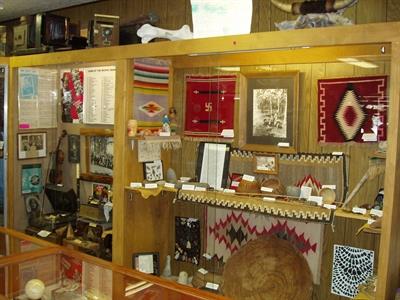
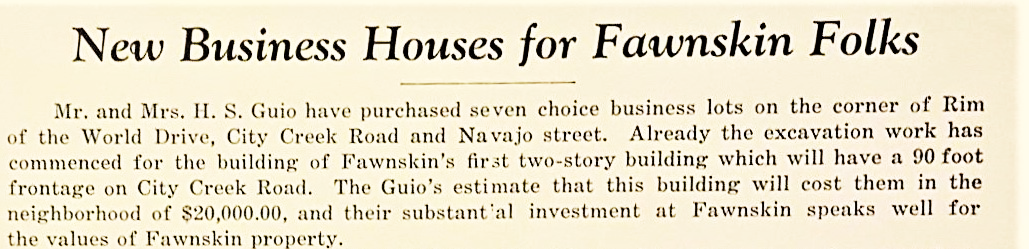
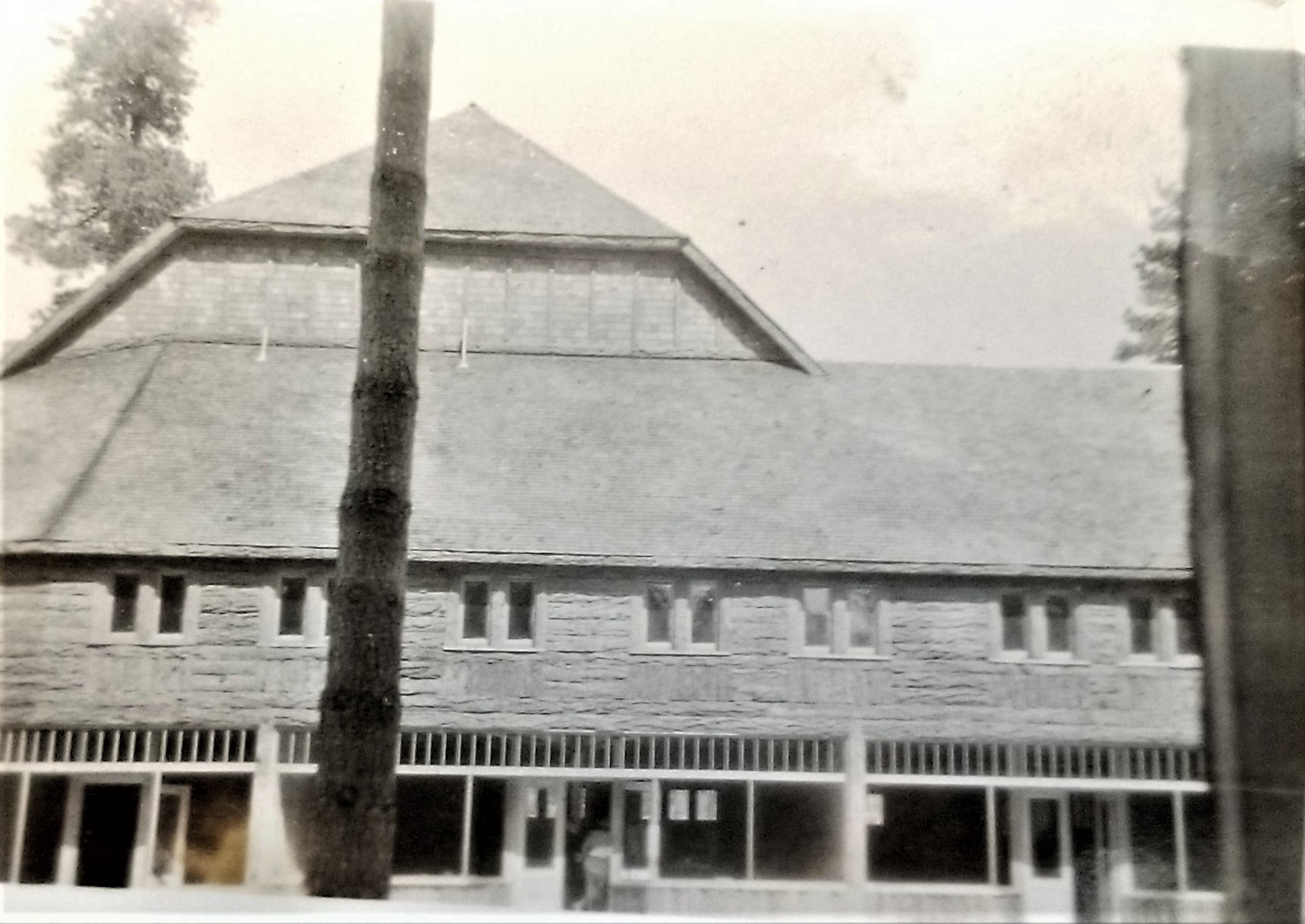
Cline Miller, Henry Guio and the building of Fawnskin's first two-story building in 1925.
Fawnskin, California · Est. 1925
One hundred years on the north shore of Big Bear Lake, and a story we refuse to let the mountain reclaim.
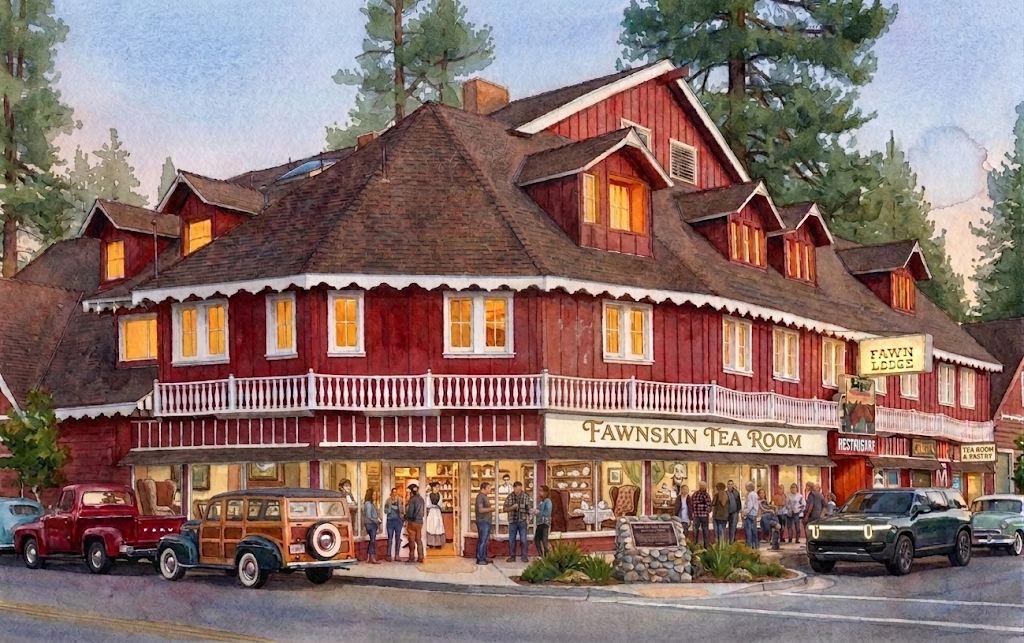
Before Fawnskin had a market, a church, or a paved road, it had this building on the corner of Rim of the World Drive.
The Serrano called this valley Yahaviat, the pine place, and had been coming here for 2,500 years before a dam turned a mountain meadow into Big Bear Lake in 1884. Gold in Holcomb Valley brought the first roads, the auto stages came in 1912, and in 1924 the highway was rerouted along the north shore, straight past a corner where Henry Guio had just bought seven lots.
Raised in the spring of 1925 as the Guio Building, it has been a tea room, a Prohibition dance hall, a drugstore, a county library, a barber shop, a hardware store, the Bambi Bar and the House of Wilson. A century later it is still standing, and it needs help.
Yahaviat to 2025
Yahaviat
Long before any of this, the Serrano knew Big Bear Valley as Yahaviat, the pine place, and had been coming here for some 2,500 years. They lived by the springs and streams in small settlements, gathered acorns, pinon nuts and berries, and held the grizzly in such reverence that its meat was never eaten and its fur never worn.
1860
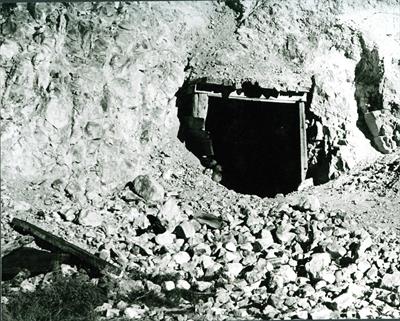
Bill Holcomb struck gold in the valley just over the ridge from Fawnskin, and the rush that followed swelled Holcomb Valley past two thousand people with stores, saloons and a blacksmith. The gold gave out, but the roads it forced through the mountains stayed.
1884–1912
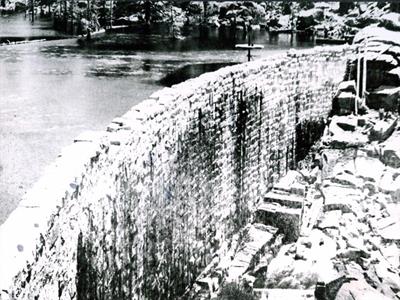
Frank E. Brown's Bear Valley Land and Water Company dammed Bear Creek in 1884 to water the orange groves of Redlands, flooding a meadow into a lake. In 1910 John S. Eastwood's multiple-arch dam replaced it downstream, finished in 1912 and nearly tripling the water: at the time, the largest man-made lake in the world.
1912
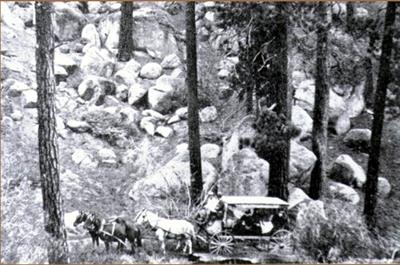
For fifty years horse-drawn stages took two days to climb from San Bernardino. In 1912 Kirk Phillips ran the Mountain Auto Line up the mountain, only the second bus line in the world, and the valley stopped being two days away.
1914
Cline Miller starts developing the north shore of Big Bear Lake. The land the lodge stands on is his.
1924
Henry and Vivian Guio purchase seven lots at Rim of the World Drive and Navajo, and break ground on Fawnskin's first two-story building, an estimated $20,000 build, roughly $300,000 today. The same year the county rerouted the Rim of the World Highway: instead of dropping into Fawnskin the back way through Holcomb Valley, it now came in over a new bridge across the dam and ran the north shore straight past the Guios' corner.
1925
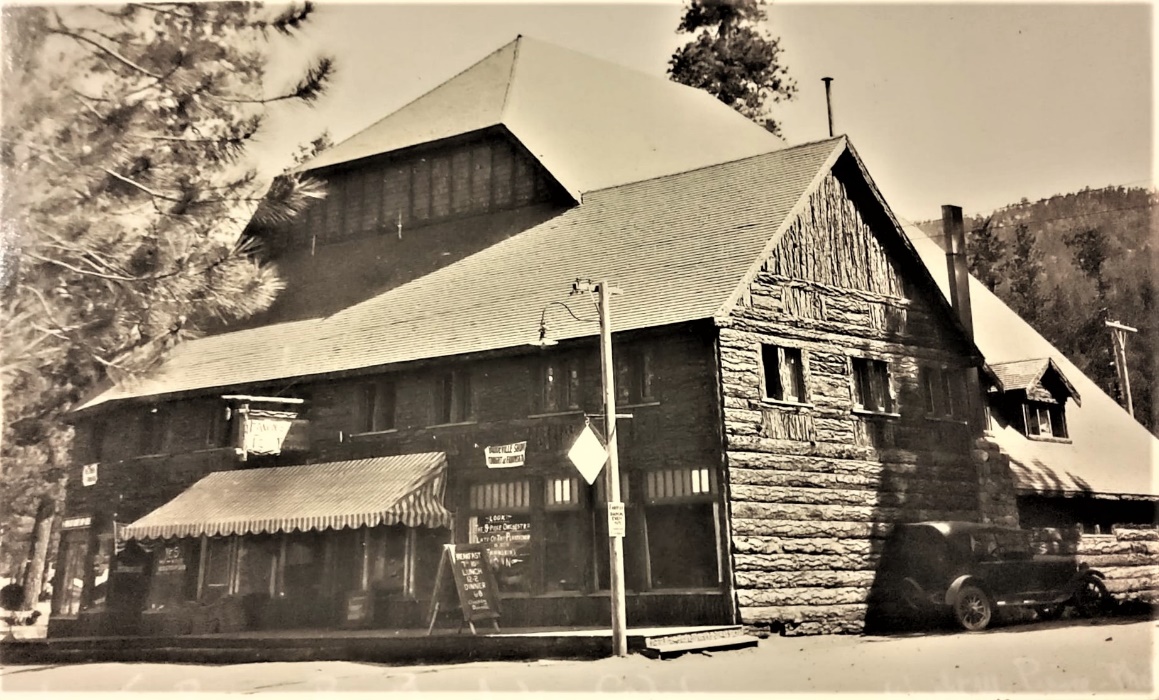
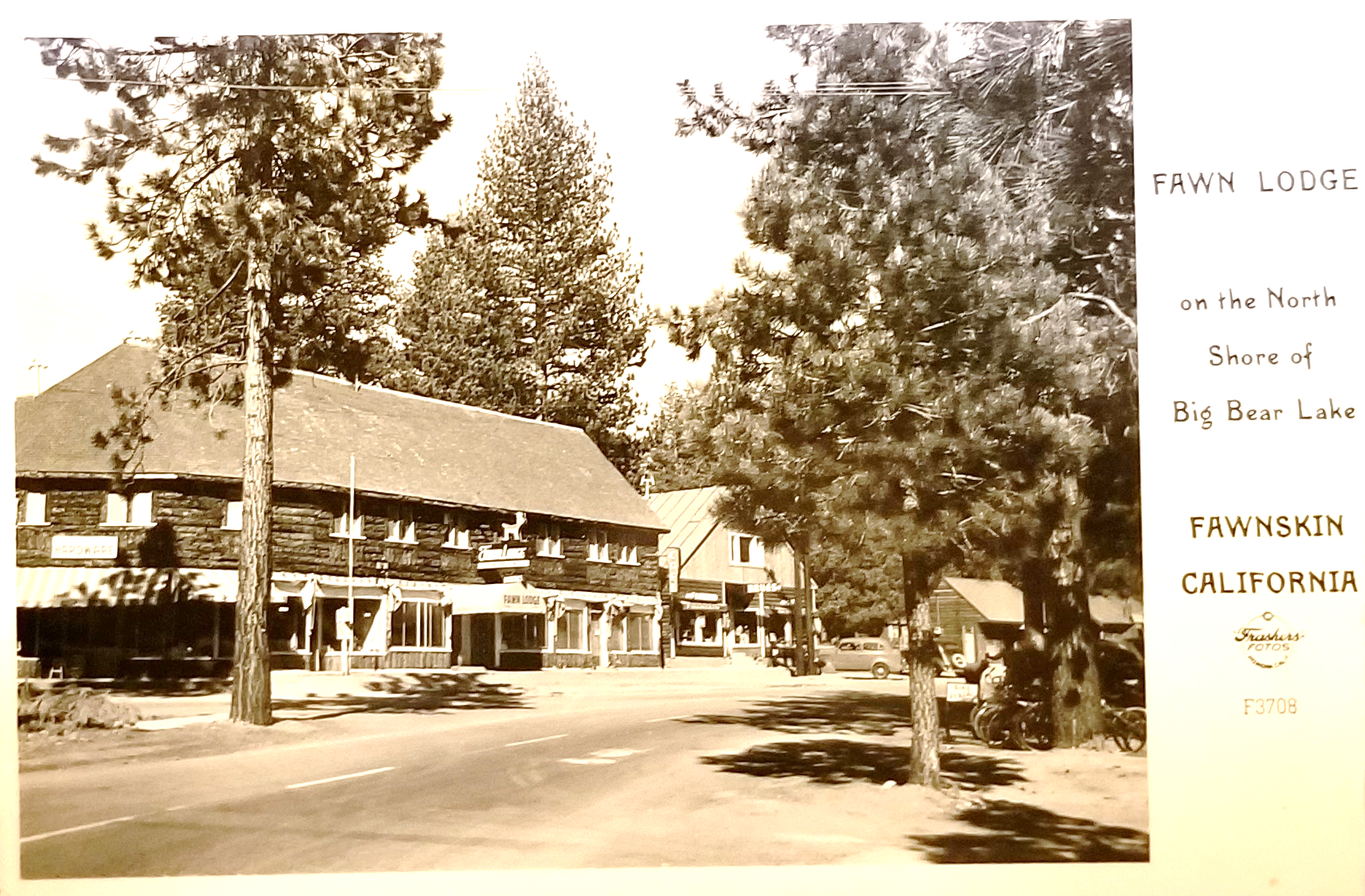
Completed in the spring, built "in harmony with the general environment": bark-clad timbers, a log-cabin face, and a high dome. Only two floors, but with the dome and a second-floor auditorium with high ceilings, it stood as tall as a four-story building. A three-chair barber shop was among the first tenants. By May it was being called the Fawnskin Lodge.
1920s
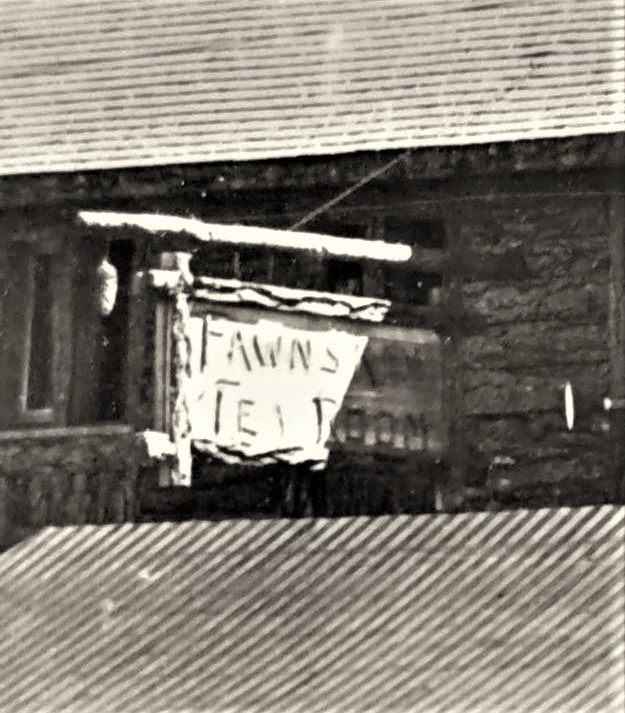
Frances Thompson created the Fawnskin Tea Room as the town's gathering place. The huge second floor became a night spot with a stage big enough for a nine-piece orchestra and a dance floor. There were no closing times then, parties ran until dawn, and though liquor was illegal, finding a drink was never a problem.
1927–1930s
Ownership passed from Guio to Ad Johnson and then to real-estate investors Michael and Maddie Ryder, who held it through the Depression. The dome stood on the lodge until the great snowstorm of the winter of 1938 finally took it down.
1941
Peter Holt takes over and the name Fawn Lodge appears for the first time. Under Holt the building housed a cafe, a drugstore, a gift shop, and the San Bernardino County Free Library. He added the canopy and awning still remembered in the postcards.
1946–1973
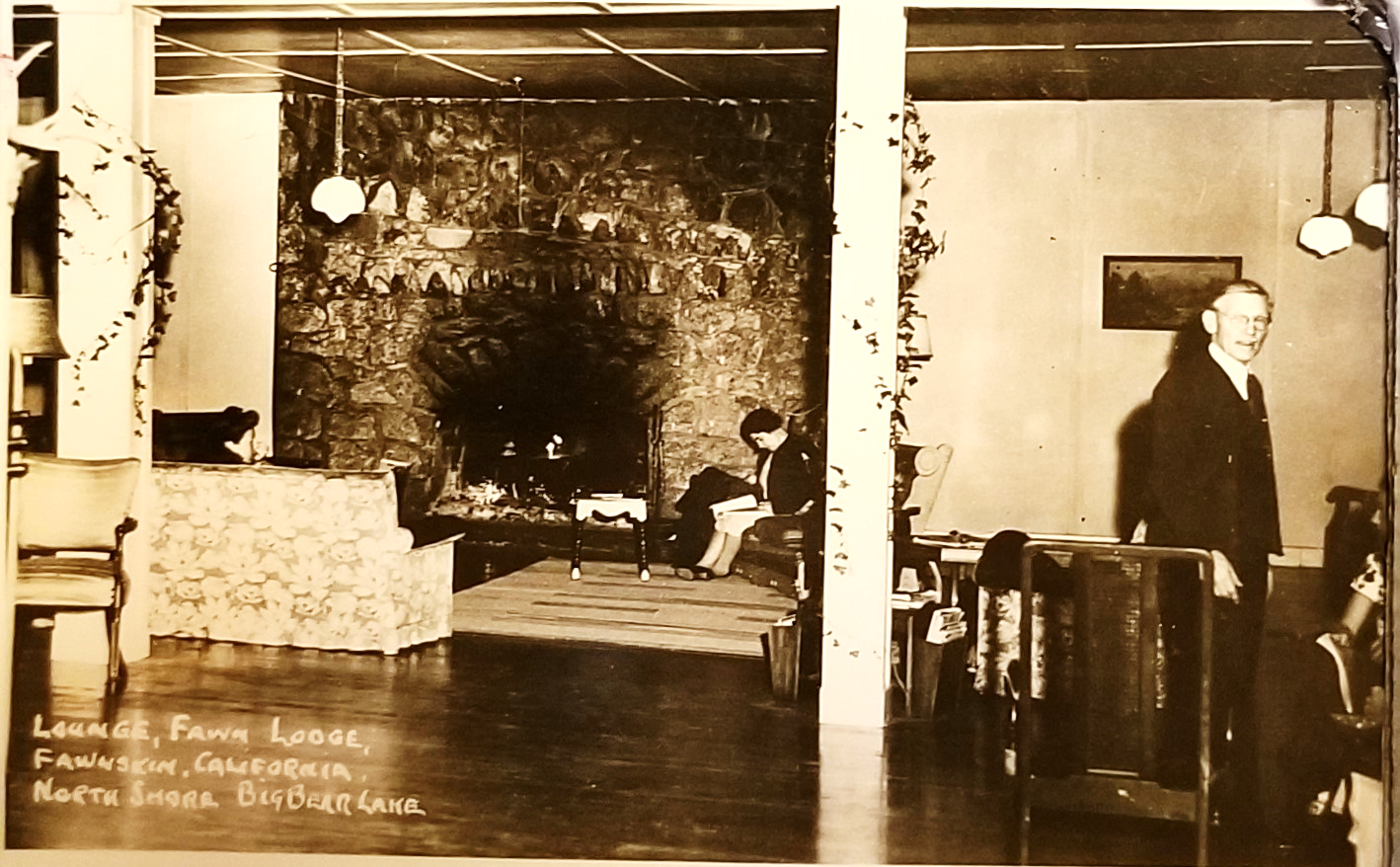
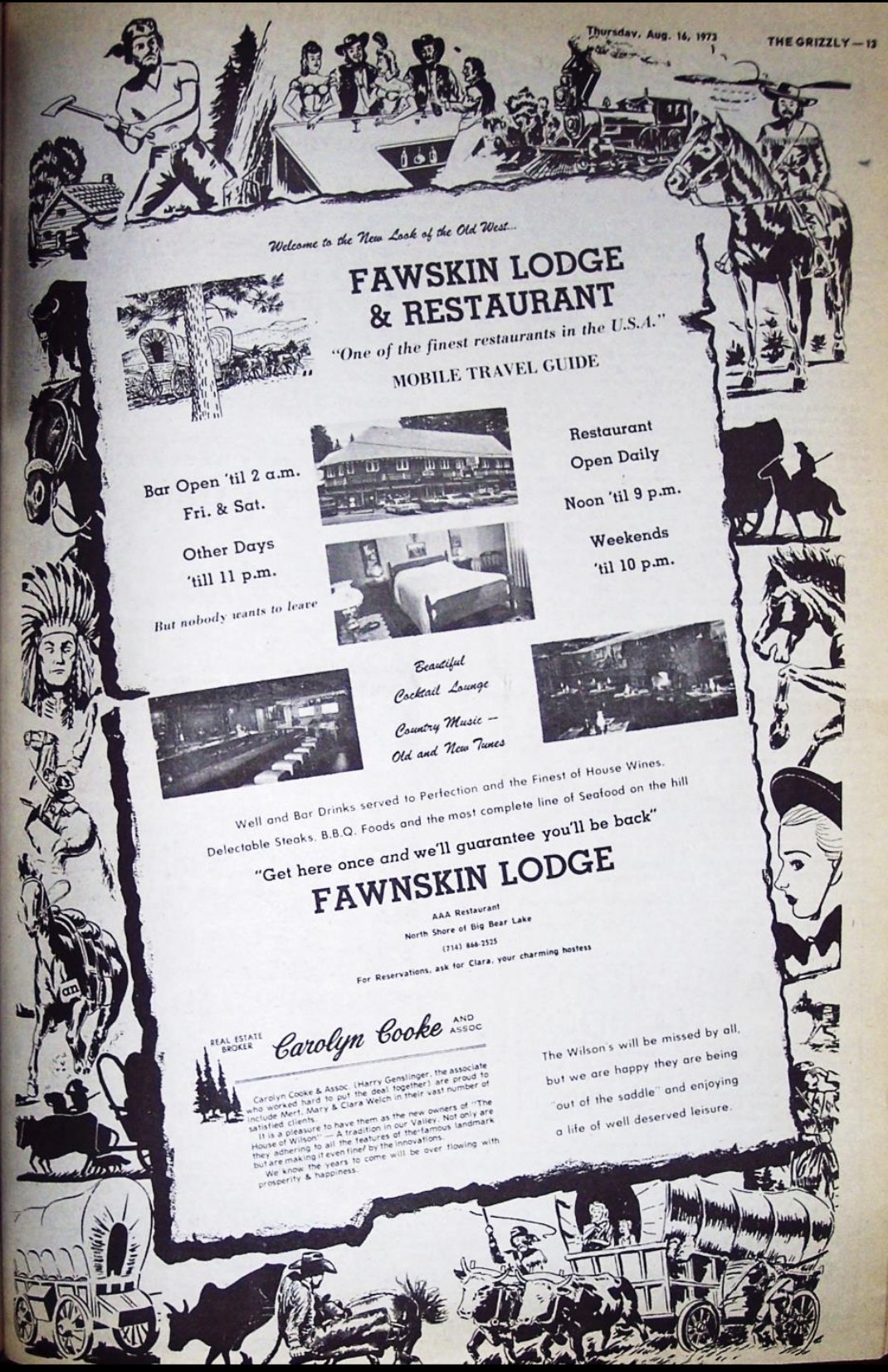
Peter and Helen Holt sell to Fawn Lodge Incorporated; Glenn Wilson pays over $50,000 for the building and its furnishings and immediately spends another $10,000 remodeling, moving the dining room so the great stone fireplace could be better used. Glenn and Jackie Wilson's restaurant became the place for every family celebration in the valley, famous for its steak dinners. Mort Traylor painted a fifty-foot mural of the Old West beside the fireplace; the building took on a Western face with white rail fencing and a wagon wheel at the door. New York steak was $6.75. A Johnny or Suzie Burger was a dollar.
1977
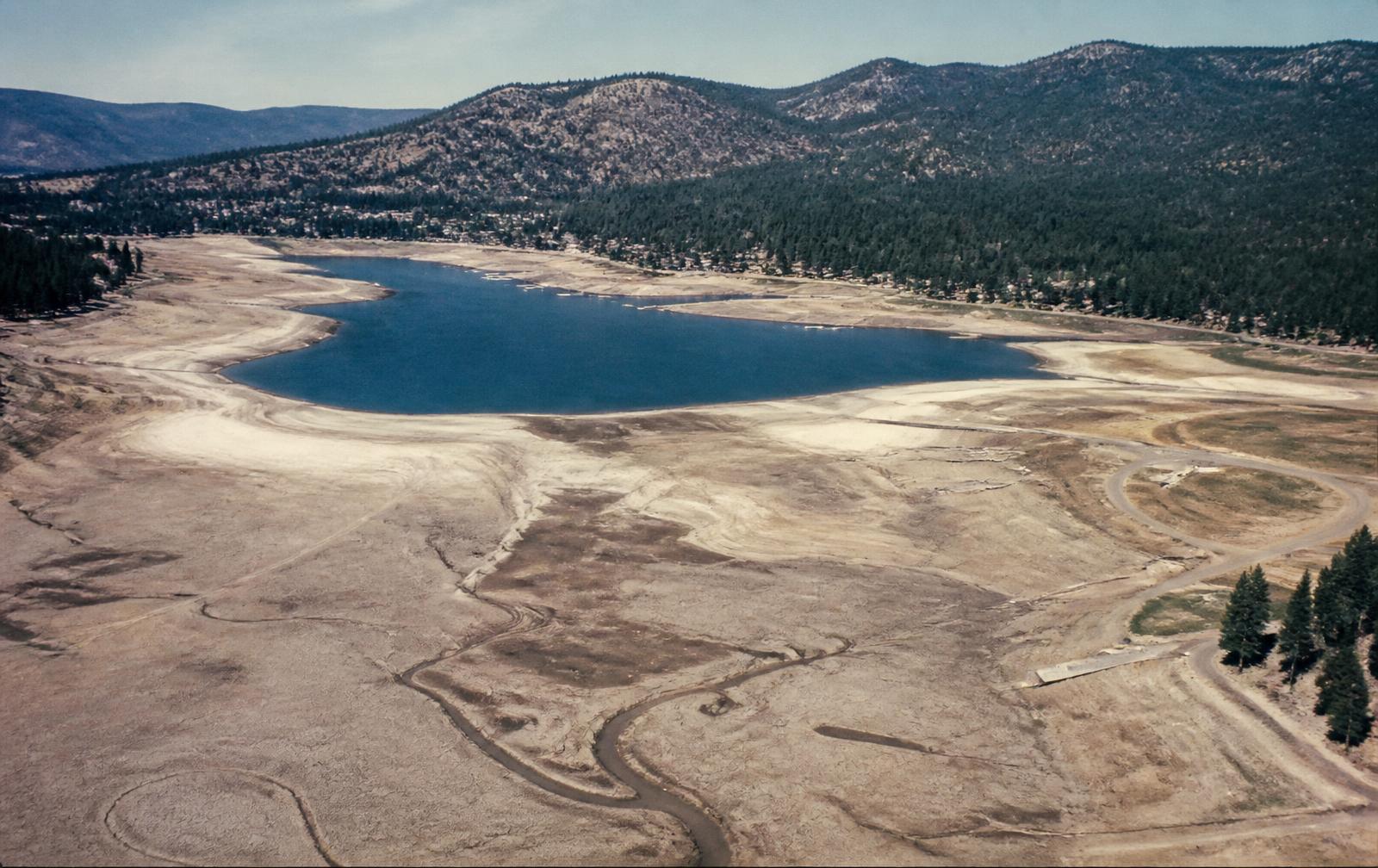
San Bernardino County voted to keep Big Bear Lake filled year-round, ending the practice of drawing it down each spring. Until then the valley had been a single-season destination, busy in winter for the ski runs and quiet the rest of the year. The Wilsons had sold the lodge just before, in 1973, a narrowly missed chance to ride the year-round tourism that the full lake would soon bring.
After the Wilsons
The Wilsons held the lodge close to twenty-five years. Ownership then passed through many investors, few of whom ran it as a business. Through all of it, the massive native-stone fireplace, a backdrop for hundreds of photographs, never changed.
1994
California Office of Historic Preservation registers the Fawn Lodge as a Point of Historical Interest (P804), San Bernardino County, recognizing its place in the story of Fawnskin and the Big Bear Valley.
2025+
A century after Henry Guio's crew raised it, the Fawn Lodge is still standing on all three of its original lots. The lodge is currently owned by the Njus family, Ingmar, Kathy, and Kevin, who have cared for it through its later years. Now Seth Wilson, fourth generation of the Wilson family and carrying on the legacy of Glenn, Robbie, and Christopher, is in talks to bring the landmark back into family stewardship and restore it so it stands for the next hundred years. Keeping it that way is what this effort is for.
From the Historians
Researched and presented by Richard Graham of the Big Bear Valley Historical Society, drawing on Big Bear Grizzly archives, Frasher postcards, county records and the Wilson family collections.
Part One
Cline Miller, Henry Guio and the building of Fawnskin's first two-story building in 1925.
Part Two
Prohibition dances upstairs, the vanished dome, the quiet Depression years and Peter Holt.
Part Three
Glenn Wilson buys the lodge, the Woodland Restaurant, the Bambi Bar and twenty new rooms.
Part Four
The House of Wilson, Mort Traylor's murals, the Western makeover and those steak dinners.
Part Five
From 1925 to today, the last chapters of the lodge's first century.
Wilson Family Films
Four reels of silent home-movie footage, kept by the Wilson family and now shared for the first time. They carry the lodge from a snowy 1962 morning out front to Christmas dinners inside, the same fieldstone hearth and wood-paneled walls at the center of all of them.
Wilson Family Film
The earliest reel in the family collection, shot in the winter of 1962. Snow banks up against the timber posts and railings outside the lodge while the Fawnskin winter runs its usual course around the House of Wilson.
Silent home-movie footage, winter 1962. The oldest surviving Wilson family film of the Fawn Lodge.
Wilson Family Film
The Wilson family gathers inside the Fawn Lodge for Christmas dinner, presents and a visit from Santa, the paneled walls and stone hearth of the great room holding it all. A young Christopher Wilson, whose first birthday the reel also marks, opens gifts on the floor beside his family.
Silent home-movie footage, circa 1968, shot inside the Fawn Lodge. Four generations of the Wilson family around the same hearth that still stands today.
Wilson Family Film
Home movie footage from the House of Wilson years, captured one snowy Fawnskin winter. Someone clears the walk in front of the lodge while the old storefronts and a Hamm's delivery truck wait it out, a rare moving glimpse of daily life at the Fawn Lodge when the Wilsons still ran it.
Silent home-movie footage, circa 1969. The Fawn Lodge is visible behind the cleared path; color has shifted with age, as vintage film does.
Wilson Family Film
Filmed around Christmas of 1970, this reel opens on the lodge dining room fully set: white linens, ruby glass lamps, red leather captain's chairs and the heavy wood of the House of Wilson dining room, ready for guests before the Wilson family sits down.
Silent home-movie footage, circa 1970, shot inside the Fawn Lodge dining room.
The Fawn Lodge Today
Still standing on Fawnskin's main road, faded red and boarded up. The sign still reads Fawn Lodge. Inside, stripped to the studs and open to the joists, the stone hearth Henry Guio's crew laid in 1925 is still standing in the middle of it.
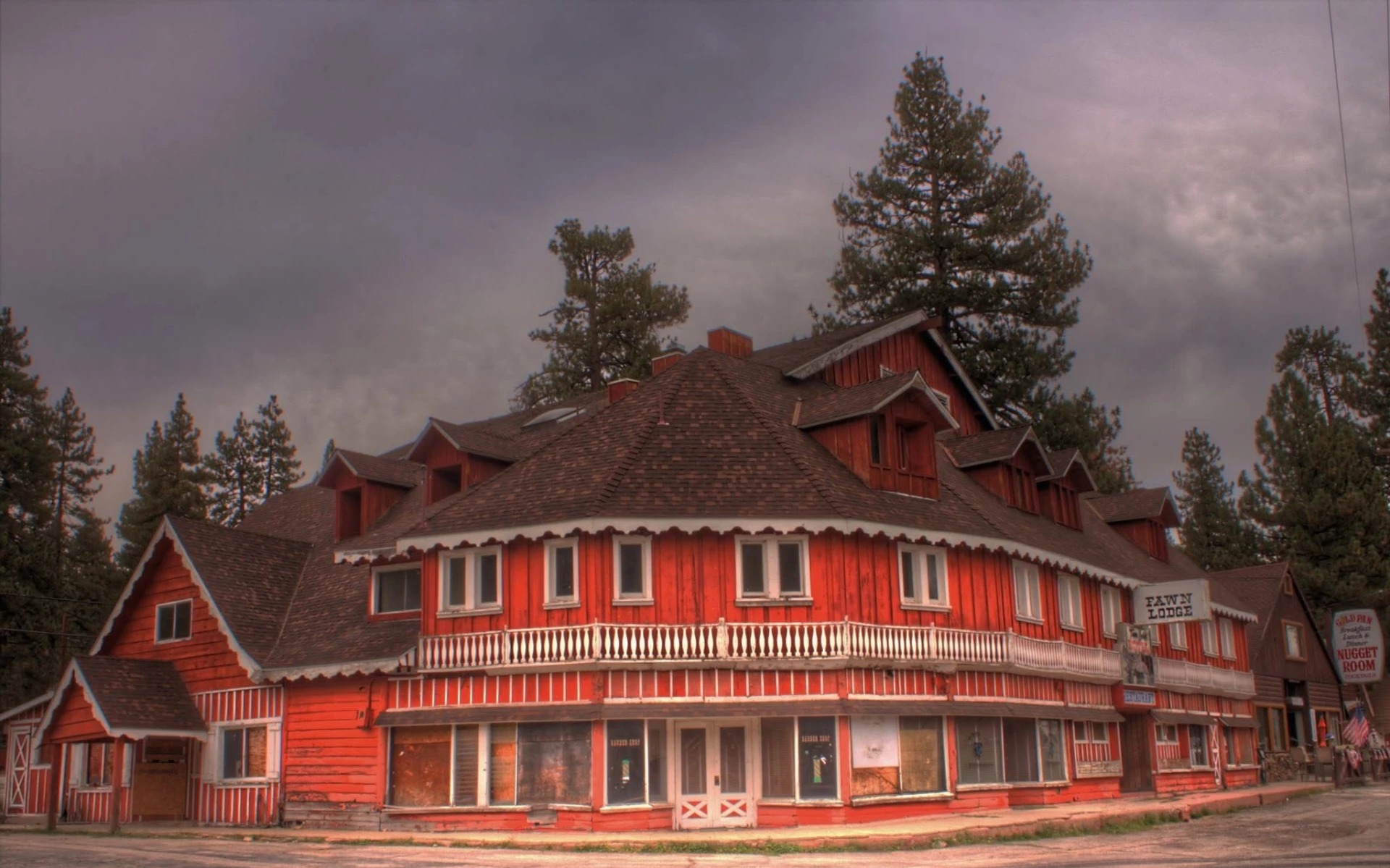
Still standing on Fawnskin's main road.
Faded red paint, plywood over the windows, and the old Gold Pan sign out front. A hundred years on, the lodge waits for its next chapter.
Inside the ground floor.
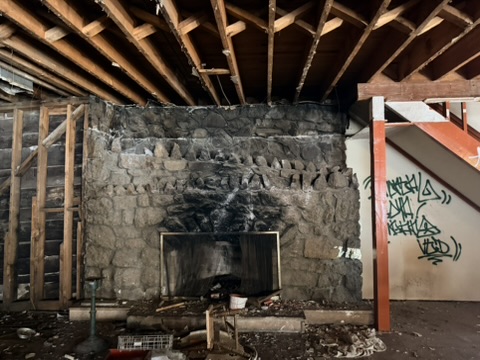
The hearth, stripped bare
The 1925 native-stone fireplace still stands floor to ceiling, soot-black and solid, with the framing torn back around it.
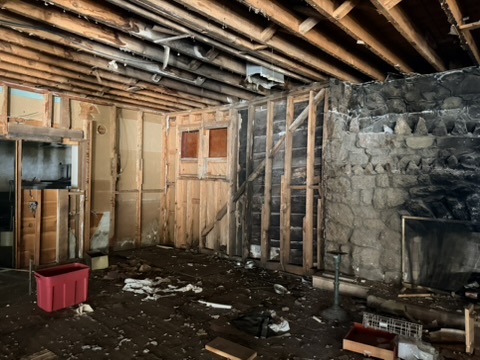
Stone and studs
The chimney mass from the side, exposed framing and conduit where the dining room walls used to be.
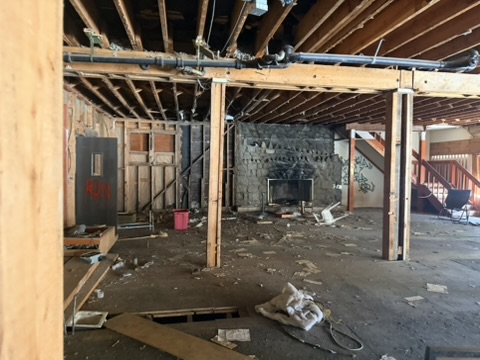
Across the main room
Temporary posts hold the ceiling while the floor waits under a century of dust.
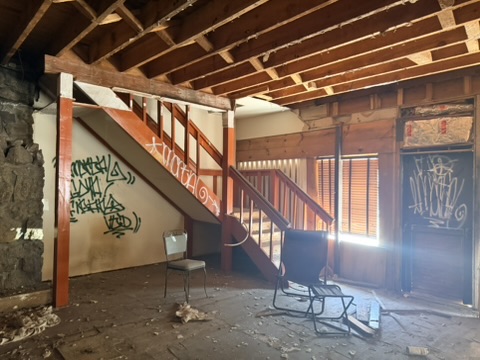
The staircase
The original stair to the second floor, still in place beside the stone wall, tagged but intact.
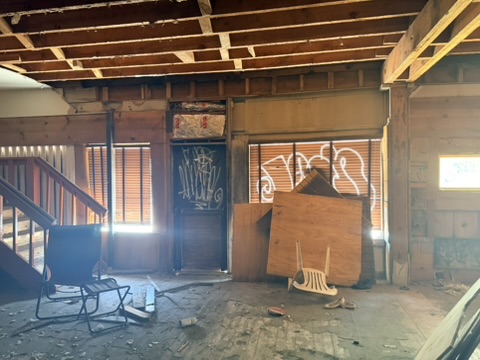
North windows
Daylight through the shuttered north windows, the old ceiling joists open overhead.
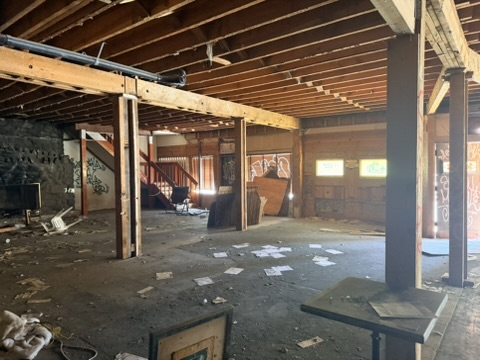
Toward the lounge
The long room that once held the bar and the jukeboxes, columns and beams all that remain.
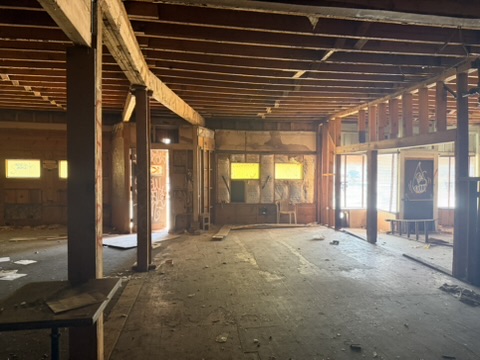
Curved beam and storefront
The gentle curve of the original front beam still reads across the ground floor.
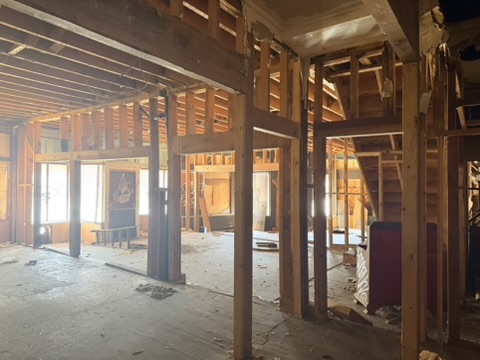
Open framing
Posts and studs laid bare, the ground floor opened up end to end.
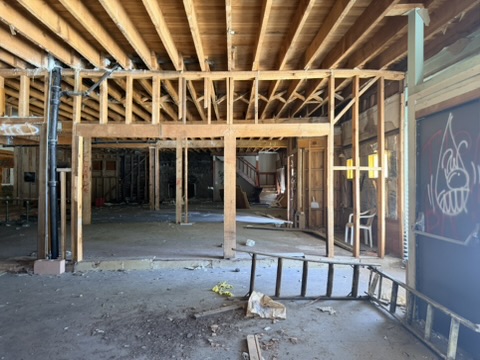
Past tenant framing
Framing left behind by previous retail tenants, braced against the original 1925 structure.
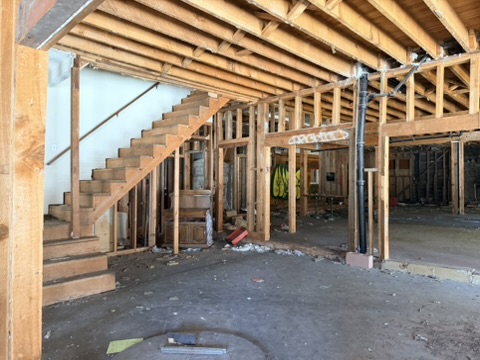
Stair and stack
The original staircase in raw lumber, with the old fireplace flue running up beside it.
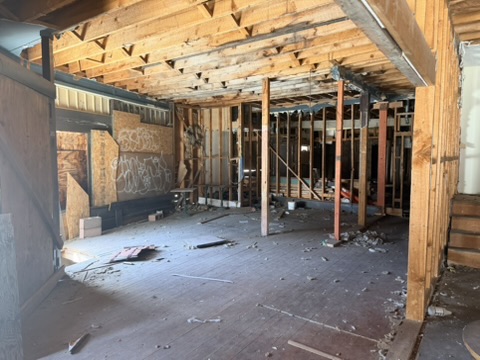
Wood floor still under it all
Original board flooring runs beneath the debris in the front rooms.
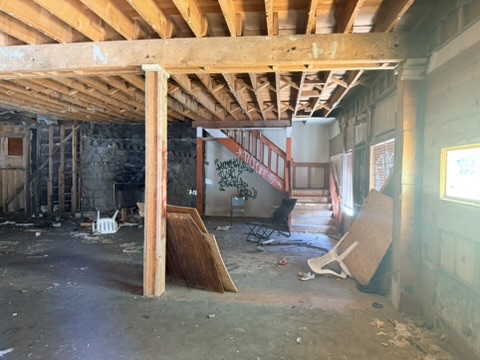
Toward the hearth
A low ceiling of joists opens onto the stone fireplace and the stair beyond.
A Lodge Worth the Journey
There was an era when travelers planned whole journeys around a lodge, when the building itself was the destination, its hearth, its dining room, its place in the landscape. The great historic lodges of the American West still draw visitors from around the world on that promise alone.
Big Bear's entry in that tradition has been standing on the north shore since 1925. The Fawn Lodge is small by their measure, but that is its strength: an intimate, storied lodge on the quiet side of the lake, waiting to take its place among them.
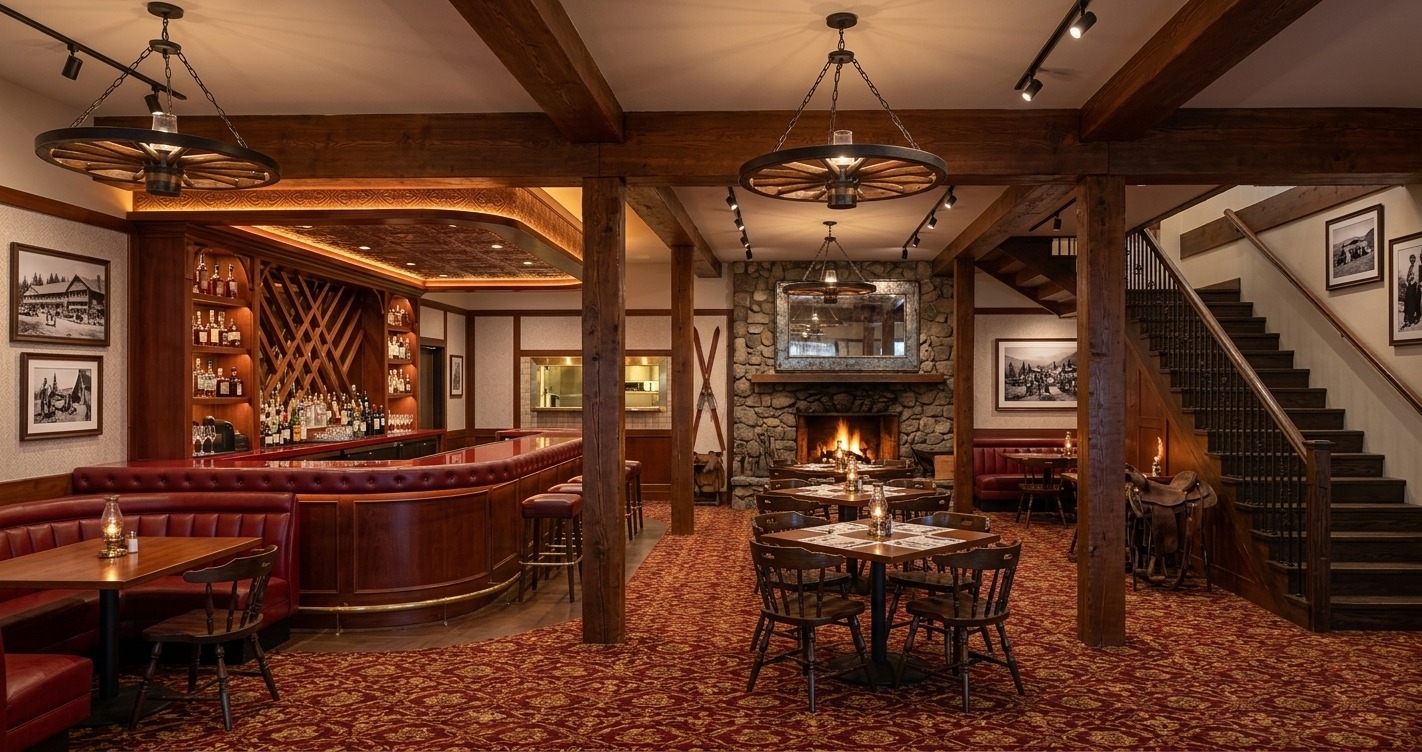
The Restoration
This is what the lodge can be again, the great stone hearth lit, the wagon-wheel chandeliers glowing, red leather booths full of families, and Mort Traylor's Western murals uncovered once more. The bones Henry Guio raised in 1925 are still here.
A century of snow and neglect has taken its toll, but nothing on this corner is lost that love and labor cannot bring back. Your gift helps us re-light the room where Big Bear has celebrated for a hundred years.
What Restoration Means
The purchase and the work are still ahead of us, so we speak in vision, not promises. But the hope is plain: a carefully restored Fawn Lodge, kept true to 1925, standing as the kind of small historic destination lodge travelers seek out on purpose, and the north shore deserves.
Restore, don't replace
The 1925 fabric stays: the native-stone hearth, the great beams, Mort Traylor's murals, the room Henry Guio raised. What a century has worn, careful hands will return, not reinvent.
The hearth as the heart
The dining room and great fireplace come back as the north shore's gathering place, the way they were through the Wilson years, when the whole valley marked its occasions here.
A year-round destination
Big Bear is no longer a single-season town. The restored lodge is envisioned as a four-season anchor on the north shore, worth the drive in January as much as in July.
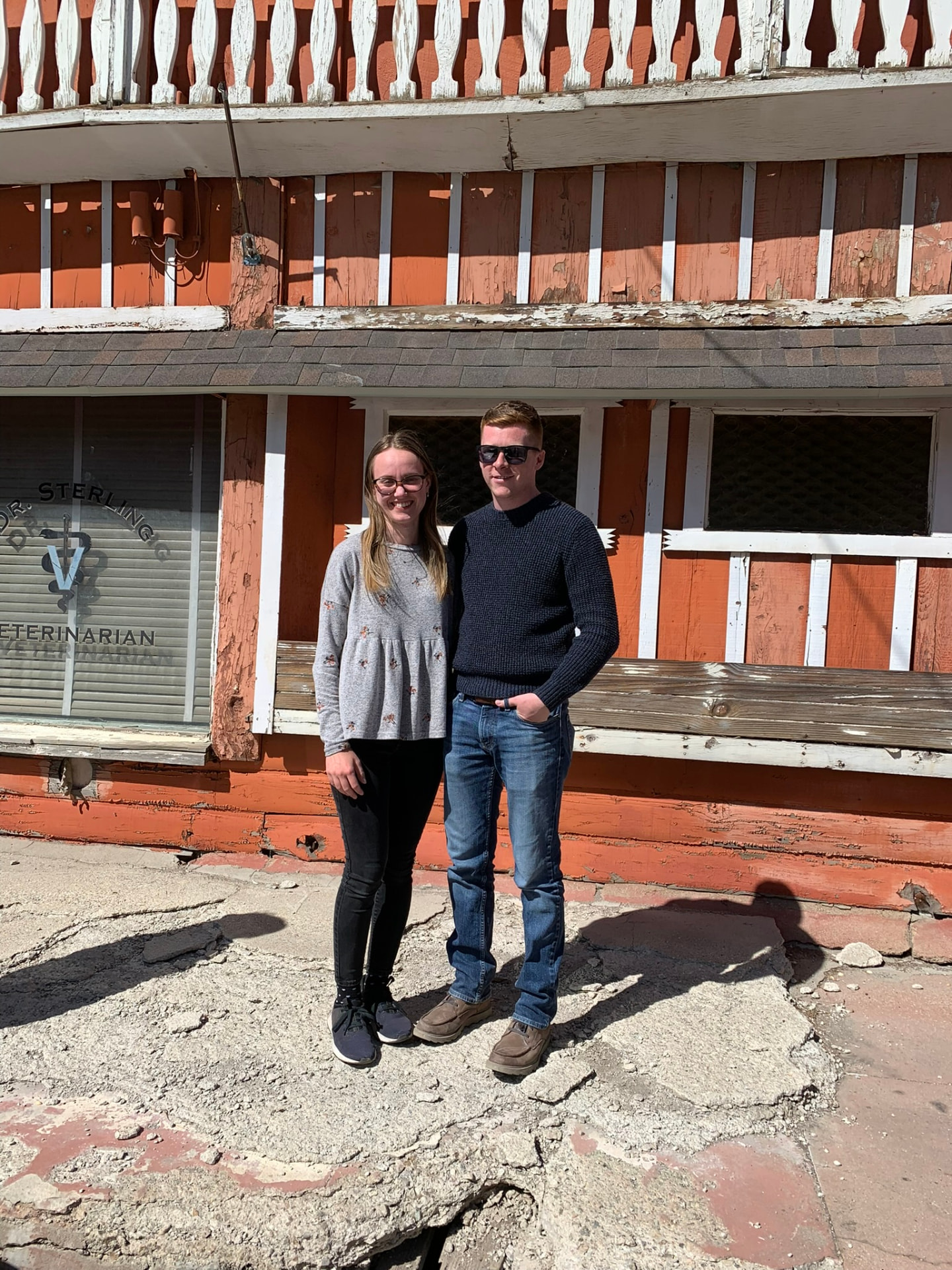
Who I Am
I'm Seth Wilson, great grandson of Glenn Wilson, grandson of Robbie Wilson, and son of Christopher Wilson. My wife Evelin and I, the fourth generation of the Wilson family, carry the responsibility for this place. The Fawn Lodge has been in my family since Glenn bought it and turned it into the House of Wilson.
On July 8, 2021, the Big Bear Valley Historical Society gathered everyone who cared about the Fawn Lodge to hear its history reviewed in full, the five-part presentation you can watch on this page. That day Glenn's son Robbie and Robbie's wife Judy (Glenn's daughter-in-law) spoke about growing up in the lodge, and Kathy and Ingmar Njus spoke about their years as its owners. It was there, in that room, that I met the Njus family and convinced them I should be the one to carry the lodge forward as its next generation.
The lodge is currently owned by the Njus family, Ingmar, Kathy, and Kevin, who have cared for it through its later years. I'm now in talks with them to purchase the property and bring it back into the Wilson family, to restore it and keep it standing for the next hundred years.
I've spent my career in commercial construction, and the Fawn Lodge is the first building I've set out to restore, the restoration of a lifetime. Saving a hundred-year-old landmark takes more than sentiment: it takes a plan, the money to do it right, and trades who know how to work on an old building without erasing what makes it itself. That is exactly what my years on job sites taught me. To be clear about what this is and isn't: nothing gets torn down, nothing gets replaced with something new on this corner. The 1925 building stays, and the work is repairing and bringing back what is already there. This isn't a flip. I grew up on the stories of Glenn, Robbie, and Christopher, on the same Fawnskin sidewalk my family stood on half a century ago. Everything on this page, every photo and every name, is part of my family's story. I'm asking you to help me bring the Fawn Lodge back to life.